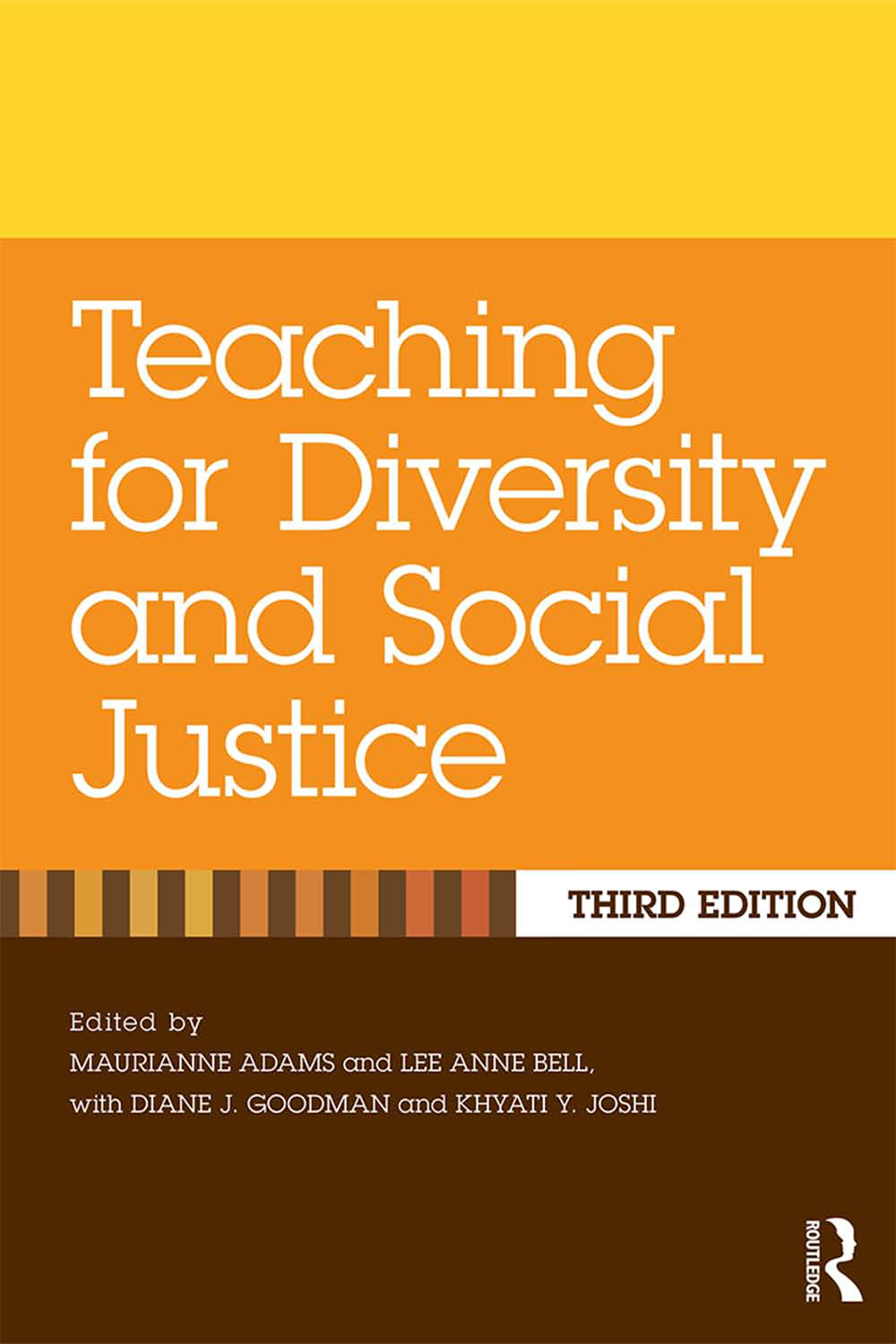
Editors: Maurianne Adams, Lee Anne Bell, Diane Goodman, Khyati Y. Joshi
To public debates full of heat, TDSJ brings light: the insights of scholars whose life’s work is helping teachers and students thrive in diverse 21st century classrooms.
Since its first edition, published two decades ago, Teaching for Diversity and Social Justice has been the definitive source book of theoretical foundations, pedagogical and design frameworks, and curricular models for social justice teaching practice. Thoroughly revised and updated, this third edition continues in the tradition of its predecessors to cover the most relevant issues and controversies in social justice education in a practical, hands-on format. Filled with ready-to-apply activities and discussion questions, this book provides teachers and facilitators with an accessible pedagogical approach to issues of oppression in classrooms. The revised edition also focuses on providing students the tools needed to apply their learning about these issues.

About the Book
Drawing on case studies and in-depth interviews with forty-one second-generation Indian Americans, Joshi analyzes their experiences involving religion, race, and ethnicity from elementary school to adulthood. She shows how their identity has developed differently from their parents’ and their non-Indian peers’, and how religion often exerted a dramatic effect. She maps the many crossroads that they encounter as they navigate between home and religious community, family obligations and school, and a hope to retain their ethnic identity while also feeling disconnected from their parents’ generation.
Through her candid insights into the internal conflicts that contemporary Indian Americans face as they negotiate this pastiche of experiences, and the religious and racial discrimination they encounter, Joshi provides a timely window into the ways that race, religion and ethnicity coincide in day-to-day life.
Table of Contents
01
Theoretical Foundations for Social Justice Education — Lee Anne Bell
02
Pedagogical Foundations for Social Justice Education — Maurianne Adams
03
Design and Facilitation — Lee Anne Bell, Diane J. Goodman, and Mathew L. Ouellett
04
Getting Started: Core Concepts for Social Justice Education — Maurianne Adams and Ximena Zúñiga
05
Racism and White Privilege — Lee Anne Bell, Michael S. Funk, Khyati Y. Joshi, and Marjorie Valdivia
06
Sexism, Heterosexism, and Trans* Oppression: An Integrated Perspective — Chase J. Catalano and Pat Griffin
07
Classism — Maurianne Adams, Larissa Hopkins, and Davey Shlasko
08
Religious Oppression — Maurianne Adams and Khyati Y. Joshi
09
Ableism — Benjamin Ostiguy, Madeline L. Peters, and Davey Shlasko
10
Youth Oppression and Elder Oppression — Keri DeJong and Barbara Love
11
Online and Blended Pedagogy in Social Justice Education — Andrea Dre Domingue
12
Critical Self-Knowledge for Social Justice Educators — Lee Anne Bell, Diane J. Goodman, and Rani Varghese
Praise
“A deeply researched, urgent, and timely book. Joshi names the water we swim in — and shows us how to imagine something better.”
Publishers Weekly · Starred Review
“Essential reading for anyone who cares about religious freedom, racial justice, and the future of American democracy.”
The New York Times · [UPDATE citation]
“Joshi writes with the precision of a scholar and the clarity of a teacher. This book will be taught in classrooms for decades.”
Prof. [Name — UPDATE] · [Institution]
“A landmark contribution. White Christian Privilege should be on every shelf in every school of education, divinity school, and DEI office in the country.”
[Reviewer — UPDATE] · [Publication]
Resources
Invite Dr. Joshi to Speak
About the Author
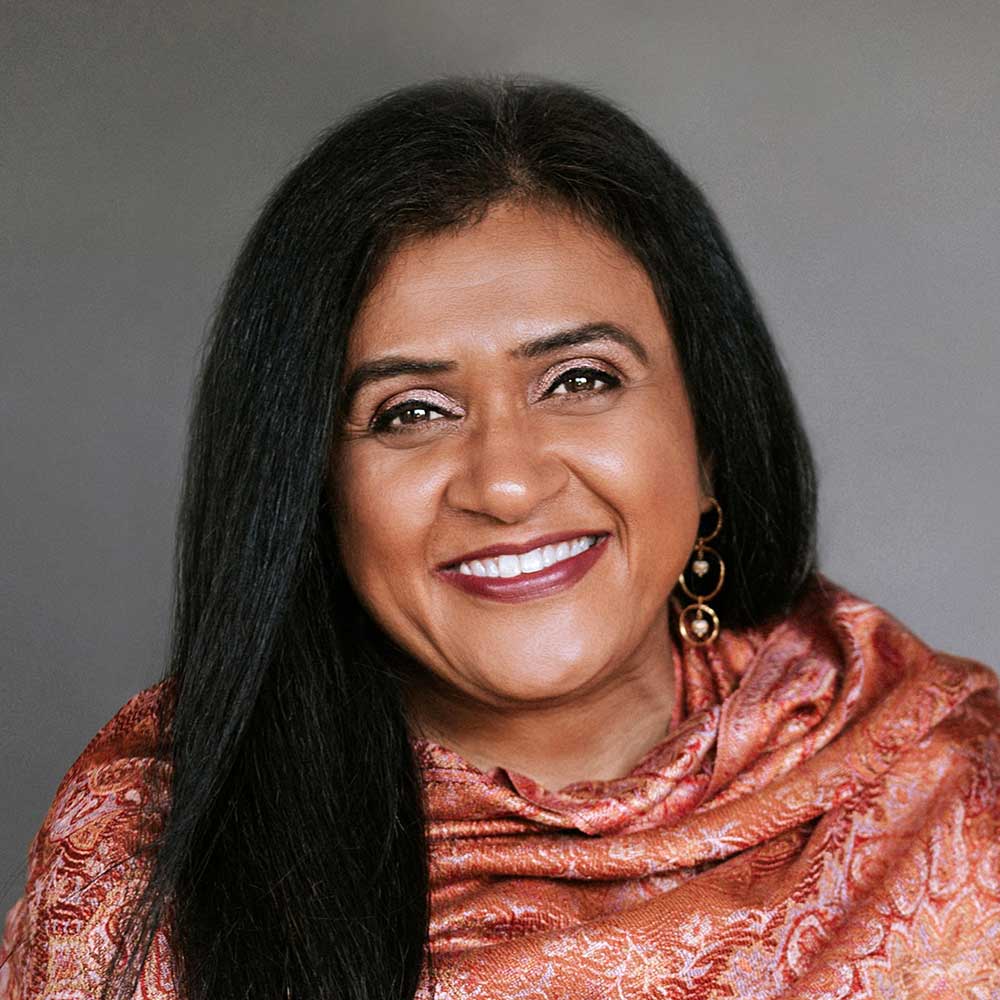
Dr. Khyati Y. Joshi is a full Professor in the School of Education at Fairleigh Dickinson University and one of America's leading voices on the intersections of race, religion, and immigration. She is the author or editor of seven books and a frequent commentator on MSNBC, CBS, C-Span, BNC, and NDTV. Her work has been quoted in the New York Times, the Wall Street Journal, the Washington Post, and the Boston Globe.
You Might Also Like